
Pet Guardians
The Top 10 Pet Toxins of 2021
It happens in one second. You look away, or you just go into the other room, or perhaps you run out on an errand—and your pet gobbles something down before you even have a chance to yell, "Noooooooo!"

It happens in one second: You look away, or you go into another room, or perhaps you run out on an errand—and your pet gobbles down something before you even have a chance to yell "Noooooooo!"
Catherine Prystup's dog, Paris, ate a mouse bait box while staying in a rental property. "We were really concerned," she tells Waggle. "The poison was chewed up, and there were bits of the actual poison scattered around."
Tamara Boneck's dog, Maya, ate an entire container of white chocolate wafers. "I was extremely worried," she tells Waggle.
Cindy Howe's dog, Charlie Brown, had quite the appetite for the forbidden. He ate a pan of brownies and, on another occasion, some ant traps. "I was very worried. You always hear how bad chocolate is for dogs, and ant traps have pesticides," she tells Waggle.
Adriana Rose's dog, Baloo, ate a honey locust pod, which is poisonous to dogs. "Baloo was very sick," she tells Waggle.

These dog owners are among the thousands who have made frantic calls to animal poison control, pleading for advice after their pet ate something hazardous. The ASPCA's Animal Poison Control Center (APCC) just announced its annual list of the top pet toxins, and it turns out quite a few dogs have a sweet tooth and a knack for eating what they're not supposed to. Calls about potentially poisonous ingestions were up 13% in 2020 from 2019. What are pets getting into that they shouldn't?
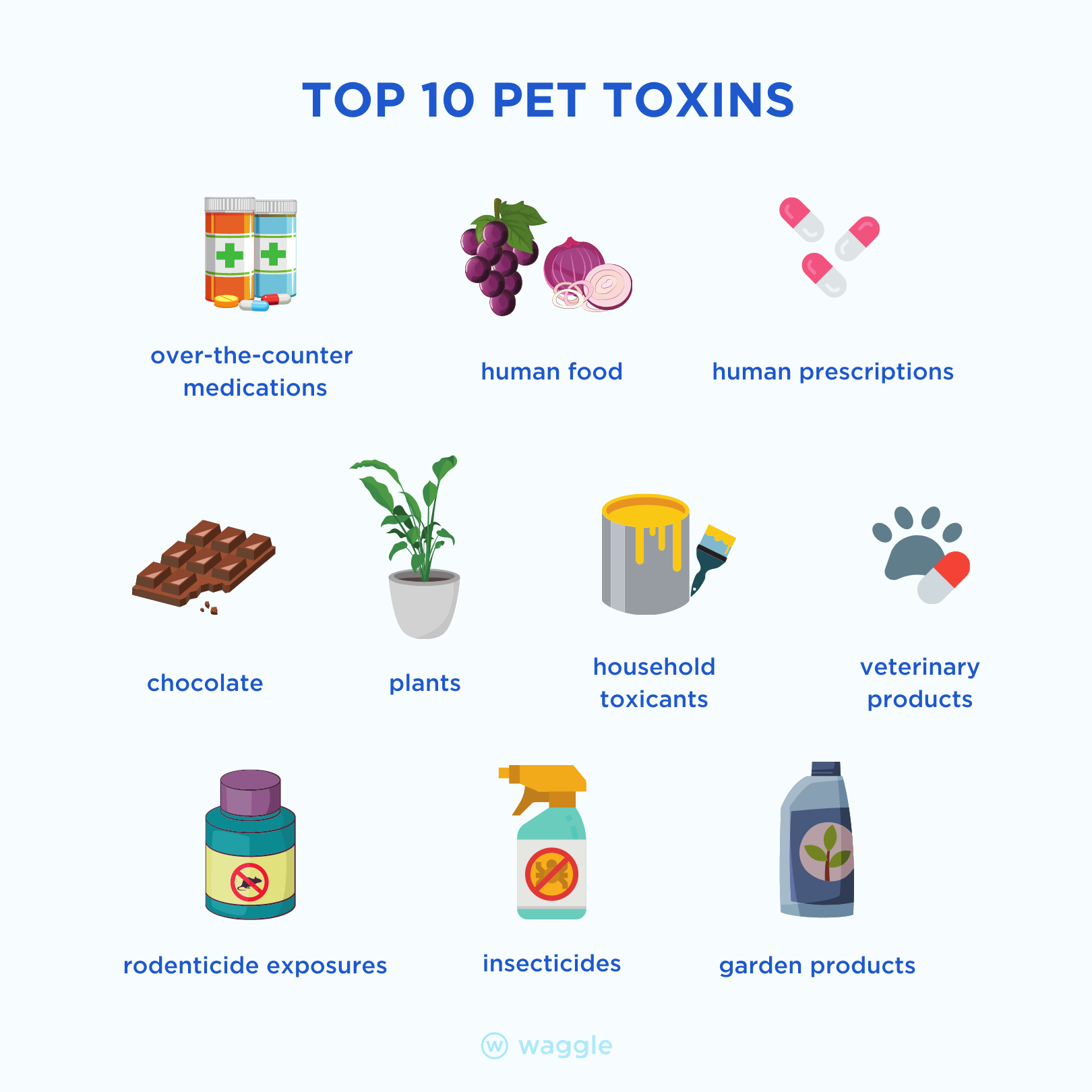
The Top Pet Toxins of 2021
- Over-the-counter medications remained number one in 2020. The APCC received almost 17% of all calls in this category. The most common items were cold medications, vitamins, and pain relievers, such as ibuprofen, naproxen, and acetaminophen.
- Human prescription medications remained at number two with 15% of the exposures. Antidepressant, anticonvulsant, and cardiac medication ingestions were very common.
- Food is number three, with 13% of exposures. There were many protein and snack bar ingestions along with the typical grapes, raisins, xylitol, onions, and garlic.
- Chocolate, chocolate, chocolate. Chocolate remains at number four but increased to almost 76 exposures per day. The higher the cocoa content, the more dangerous it is.
- With the pandemic, more people, found themselves decorating with plants (especially succulents) or sending bouquets to friends and family. Plants moved from number eight to number five—with almost 9,000 more exposures in 2020 compared to 2019.
- Household toxicants remained at number six (8.3%), with lots of home improvement items (like paint and spackling) on the list.
- Rodenticide exposures remained at number seven with 8% of the call volume. Unfortunately, these cases are becoming more difficult to treat with the rising popularity of cholecalciferol (vitamin D) based baits.
- Veterinary products tumbled from number five to number eight in 2020. Chewable medications (pain medications, incontinence medications, calming treats) make up a large amount of this category.
- Insecticide cases keep decreasing and now make up about 4.7% of cases.
- Garden products remain at number ten, with 2.9% of the cases.
What to Do If Your Pet Ate Something Poisonous
APCC senior director Tina Wismer, DVM, says if you have any concerns about something your pet ate, call them immediately. "It is best to have an emergency plan of action in the case that something happens to your pet or you suspect they may have ingested something potentially poisonous," Dr. Wismer tells Waggle. "It is also smart to educate yourself and those in your household on the harmful substances that should be kept away from your pets."
Experts say not to try a DIY fix if your pet ingested something poisonous. "There are many myths about inducing vomiting at home that may end in more danger for your pet. Do not ever try to perform an at-home remedy, especially without consulting your veterinarian first," Dr. Wismer adds.
Pet owners can always call the APCC (888-426-4435) if they have any questions or concerns. It's staffed by veterinary toxicology experts 24 hours a day, 365 days a year. The staff specializes in helping panicked pet parents and their furry friends when emergencies involving potentially toxic substances arise.
When you call, a veterinary staff member will gather vital information to create a case and plan.
Step One: Give Information About Your Pet
You'll be asked a series of questions about your pet, including their breed, age, weight, and health history. This is important because some breeds are prone to certain health conditions. For example, dogs with flat faces can have breathing issues, so inducing vomiting may not be recommended.
Step Two: Give Information About the Toxin
Having as much information on what your pet was exposed to is helpful. You will be asked questions about the product package, the strength of ingredients, and the amount your pet ingested. If you have the package, keep it with you when you call. If your pet is acting ill or you tried a home remedy, let the APCC caseworker know.
Step Three: Follow the Treatment Plan
Once the experts gather all the information, they will give you a treatment plan. This may include home care or a trip to the veterinarian. You'll receive a case number and a call-back number. If you need to take your pet to the animal hospital, give the staff your case number and have them call the APCC.
Adriana wrote down her dog's case number she received from poison control and was ready to give it to her veterinarian if the doctor had questions. "Luckily, he checked out OK at the vet," she says. "It just took a few days to get out of his system.
In the Future...
To avoid these kind of disasters, experts recommend reading up on what is hazardous for your pet to ingest. "Pay attention to everything they may get a hold of. All pets are naturally curious and will go out of their way to snack on something that smells good to them, or that is in paw's reach. Make sure you have anything toxic to your pet in places they cannot get to. Remember that cats can climb higher than dogs and may be able to find new ways to reach things," Dr. Wismer says.
You may not see your pet eat something they shouldn't, but if they start acting lethargic or experience a loss of coordination, a change in urination, or seizures, you'll want to get help quickly. Familiarizing yourself with basic pet first aid is also important - It ensures you can be there for your pet until professional help arrives!
Paris, Maya, Charlie Brown, and Baloo gave their owners quite a scare, but thankfully they all recovered.